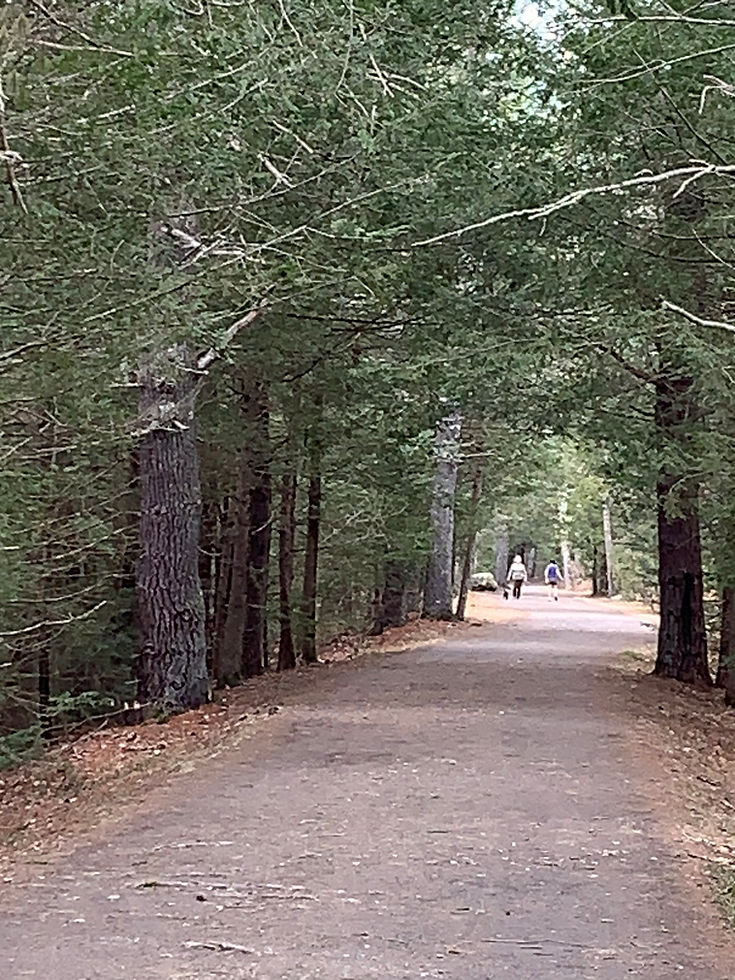
The Beauty of Spring
I still remember the first day the Central Mass Rail Trail felt walkable again—not “technically possible if you’re careful,” not “watch for black ice,” but truly walkable. After a long winter of snow and ice, that difference matters. It’s the difference between bracing your shoulders and holding your breath, and letting your body exhale.
This winter had asked a lot of me. The snow kept coming, the temperatures stayed stubborn, and every day I went to work I had the same thought: *the hill.* My workplace sits on a big hill, and in winter that hill becomes its own kind of obstacle course. Some mornings it felt like I was negotiating with gravity before I’d even had a chance to negotiate with my own mind. I’d step carefully, tense through my calves, and keep my eyes trained on the ground like it was the only thing that could keep me safe.
By the time spring started hinting at itself, I realized how small my world had become. Not in a dramatic way—just in the quiet, cumulative way that happens when you spend months watching your footing. I was moving through my days with caution as my default setting. Even when I wasn’t on the hill, my body still acted like I was. Tight jaw. Tight shoulders. A kind of low-grade vigilance that followed me home.
So when the forecast finally promised a mild afternoon, I didn’t overthink it. I put on sneakers instead of boots. I grabbed what I needed and drove to the trail with the simple intention of walking until something in me softened.
The Central Mass Rail Trail has a way of meeting you where you are. It doesn’t demand a performance. It doesn’t care if you’re fast or slow, if you’re training for something or just trying to feel like yourself again. It’s steady. It’s open. It’s a long line of permission.
At first, I walked like it was still winter. My steps were careful, my eyes scanning for slick patches that weren’t there. I realized I was still expecting the ground to betray me. That’s what a hard season can do: it teaches you to anticipate the worst, even when the worst has already passed.
But the trail was different now. The air had that early-spring coolness that feels clean instead of cruel. The sun wasn’t hot, but it was present—like a hand on your back, gentle and reassuring. Somewhere above me, birds were doing what birds do when they’re convinced the world is turning toward life again. And the trees—still not fully awake—held those tiny signs that something was happening under the surface.
I didn’t come to have a revelation. I came to walk. Yet a few minutes in, I felt something shift: my shoulders dropped. Not all at once, but enough that I noticed. My breathing changed too—less shallow, less guarded. It was as if my body finally received the message my mind had been trying to send for weeks: *You’re safe enough to move forward.*
There’s a particular kind of fatigue that comes from winter, especially when it’s heavy with snow and ice. It’s not just physical. It’s the fatigue of planning every step, of calculating risk, of carrying the extra weight of “what if.” Working on a big hill amplified that. The hill wasn’t only a hill; it was a daily reminder that ease was not guaranteed. And over time, that reminder can seep into everything.
As I walked, I started paying attention to the small things I’d missed. The sound of my shoes on packed dirt. The way the light filtered through branches. The faint scent of thawing earth—subtle, but unmistakable. I realized how long it had been since I’d let myself notice anything without rushing past it.
Halfway down the trail, I stopped—not because I was tired, but because I wanted to. That alone felt like wellness. Not pushing. Not proving. Just pausing.
I stood there and let the quiet do its work. I thought about how winter had trained me to clench, and how spring was inviting me to unclench. I thought about the hill at work and how I’d been meeting it with grit every day, even when I didn’t feel strong. And I felt a surprising tenderness toward myself. Not the kind that says, “You should have handled it better,” but the kind that says, “Of course you’re tired. Look what you’ve been carrying.”
That’s the thing about movement: sometimes it’s not about burning energy, but about returning to yourself. A walk can be a reset button you don’t have to earn. It can be a way of telling your nervous system, gently and repeatedly, that the season has changed.
On the way back, I noticed I was walking differently. My stride was longer. My gaze lifted. I wasn’t scanning the ground anymore; I was looking ahead. It struck me how symbolic that was, and I almost laughed. Not because it was cheesy, but because it was true. When you’ve spent months watching for ice, it takes time to trust the path again.
By the time I reached my car, I didn’t feel like a brand-new person. The stress of work didn’t vanish. The hill would still be there tomorrow. But something important had happened: I’d made contact with hope in a practical way. Not as an idea, but as an experience in my body.
If you’re coming out of a hard winter—literal or metaphorical—consider this your permission slip to start small. You don’t have to overhaul your life to practice wellness. You can begin with one walk. One afternoon where you let the air touch your face and remind you that you’re allowed to feel better. One stretch of trail where you practice trusting the ground again.
Spring doesn’t demand that we bloom overnight. It just invites us to thaw—slowly, steadily, step by step. And sometimes, healing looks exactly like that: putting one foot in front of the other on a path that’s finally clear, and letting your body learn what your heart has been hoping all along—that easier days can return.

Comments